
President Roosevelt’s Favorite Dish

2013 May 7
by Pat DiGeorge

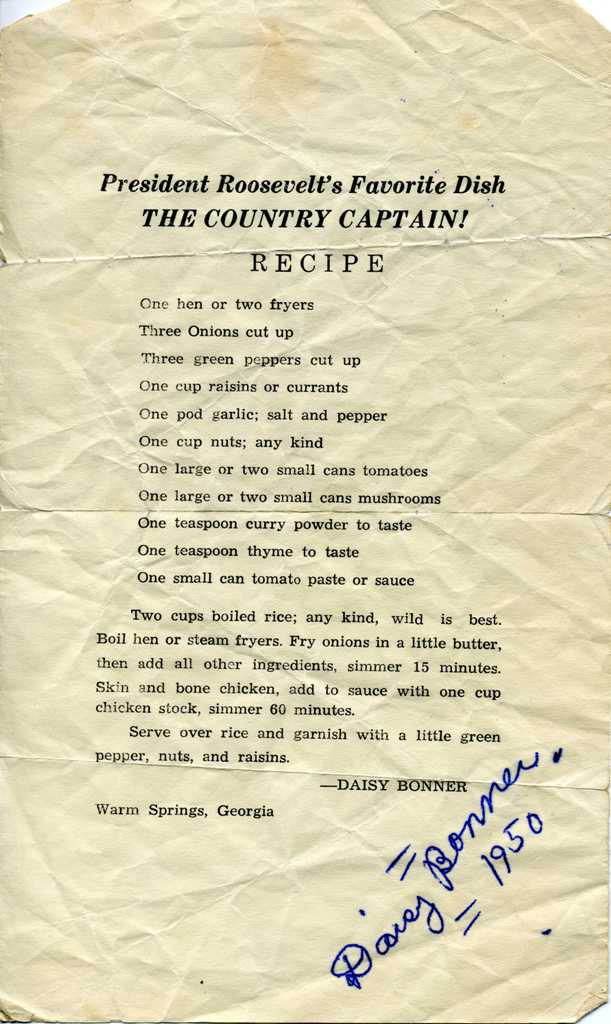
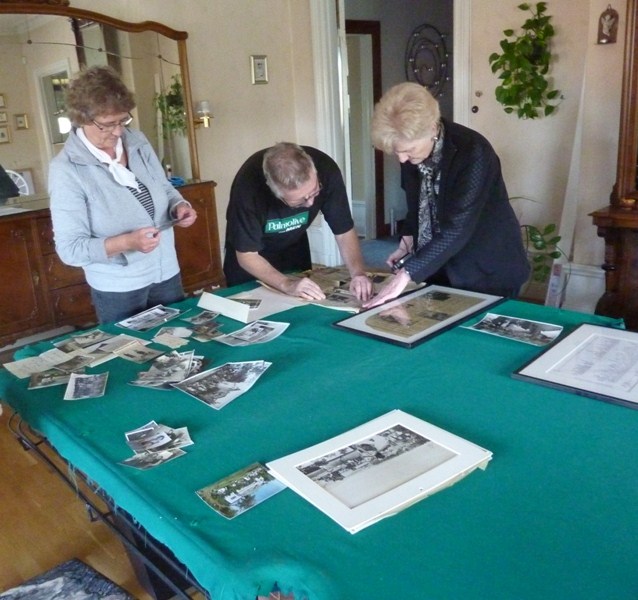
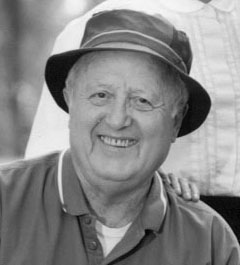
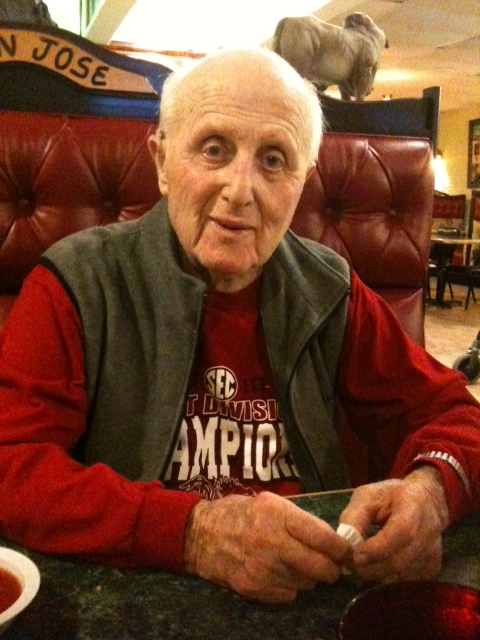
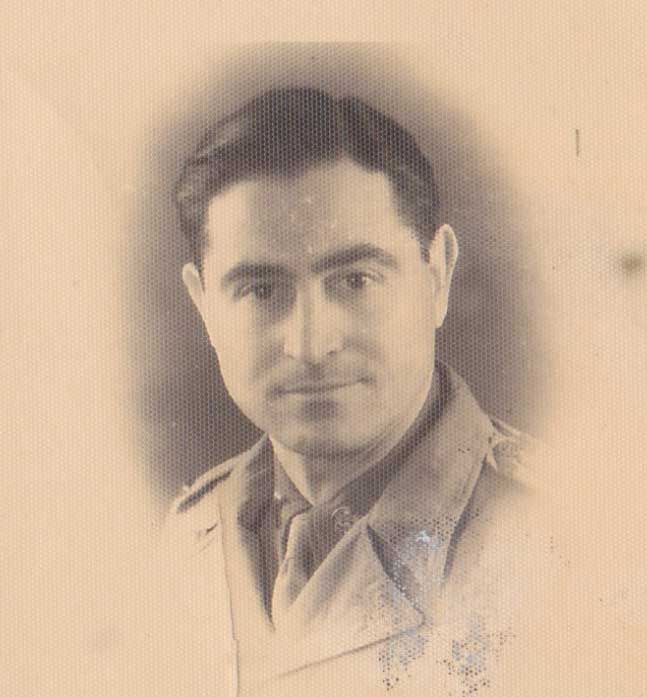
FDR recipe by Daisy Bonner 1950It’s been a while since I’ve written about one of my favorite World War II veterans, Lt. Col. Monroe F. “Buddy” Stamps. Buddy also served our country in Korea and on his very last day of duty barely made it out alive.
Buddy grew up in Manchester, GA, a stone’s throw from President Roosevelt’s Little White House at Warm Springs.  Buddy’s mother happened to be a friend of Miss Daisy Bonner, the President’s cook while he was at Warm Springs.

Daisy cooked for the President for twenty years.  In fact, she prepared “the first meal and the last” that he enjoyed in his beloved little home in rural Georgia near the healing springs.  Just so no one would forget she scribbled those words on the kitchen wall.

Mrs. Stamps, Buddy’s Mom, asked Daisy to autograph this recipe, which Daisy labeled as the President’s favorite. Rumor has it that Daisy was indeed FDR’s preferred cook.

I read here that FDR’s favorite meal was “Brunswick Stew” but I beg to disagree.  Daisy said it was “The Country Captain!” and I’ll take her word for it.

Daisy Bonner died on April 23, 1958, at her home in Warm Springs.  She was only 55 years old.

 
Google


Share this Post

Ulf Gahm

2013 May 1
by Pat DiGeorge
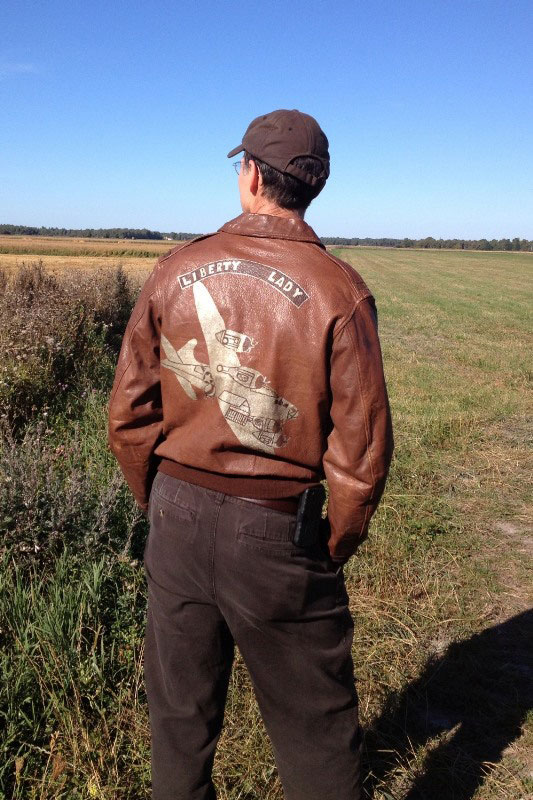
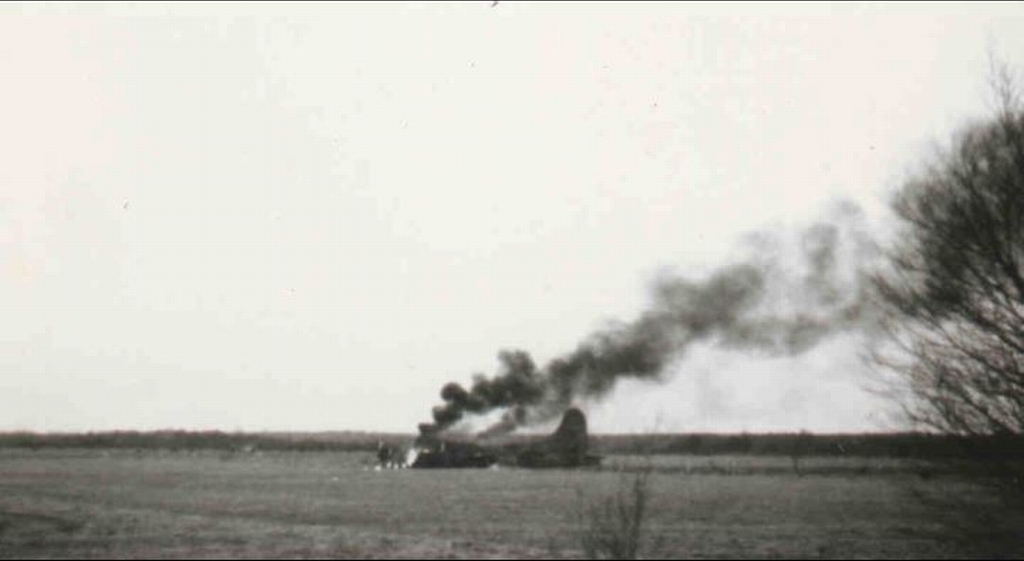
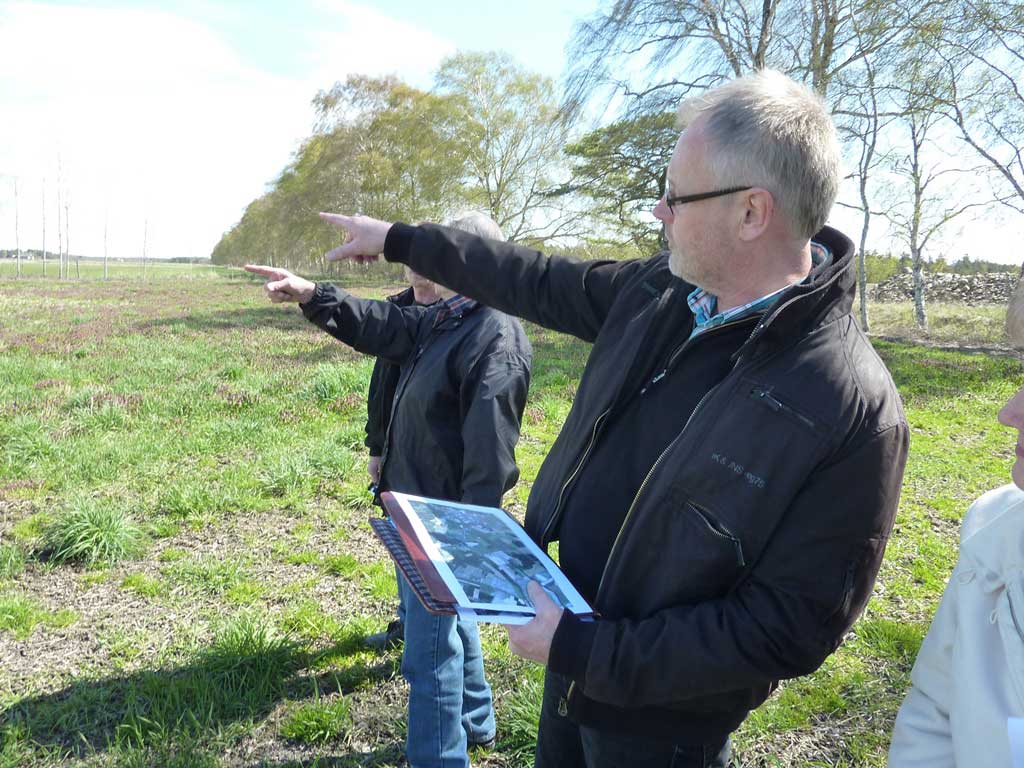
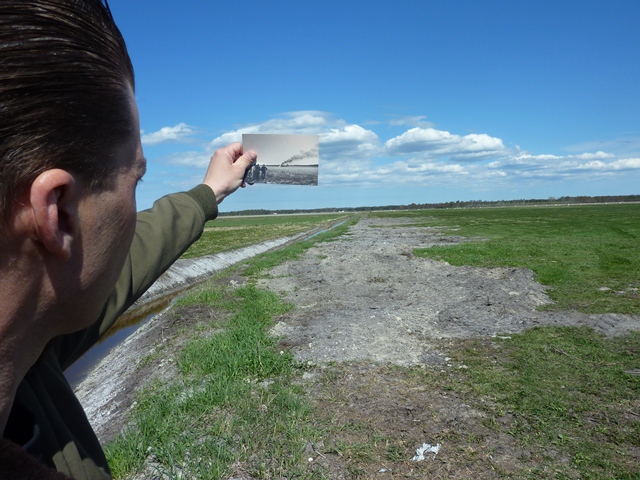
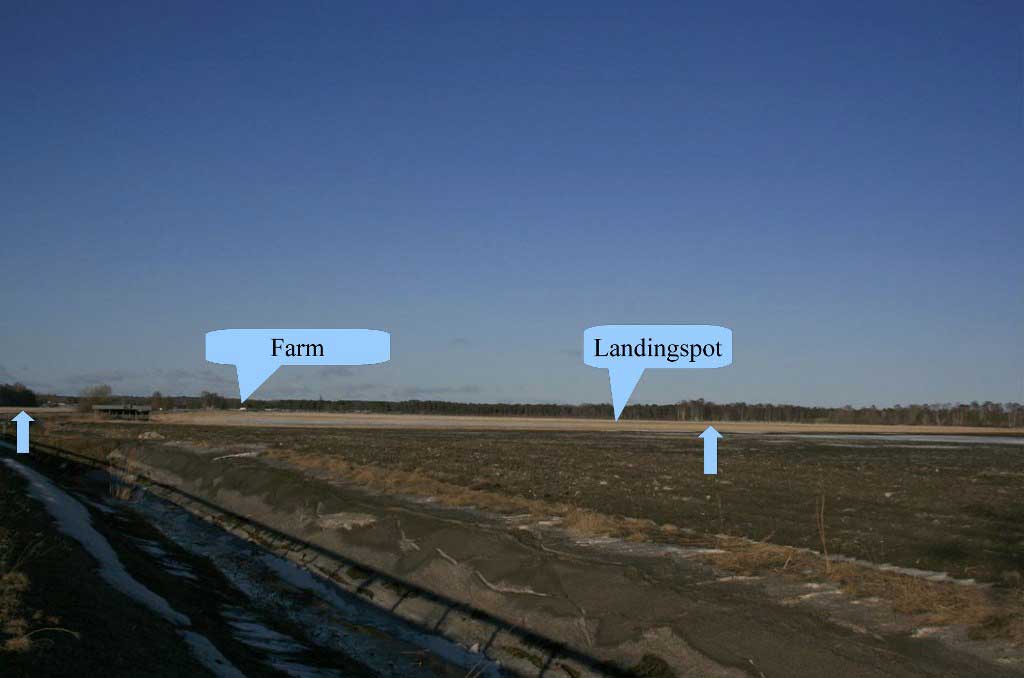
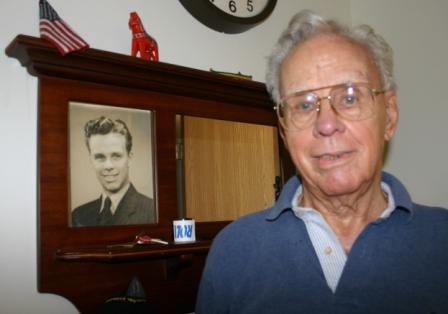
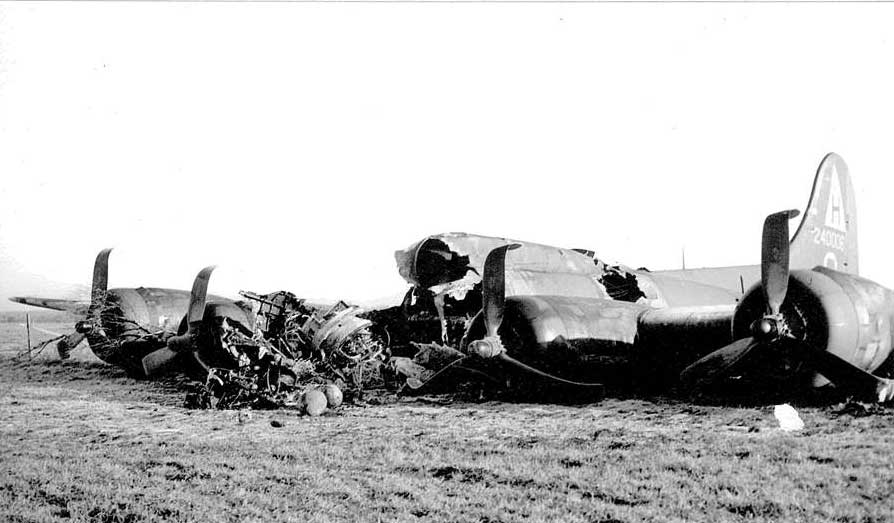
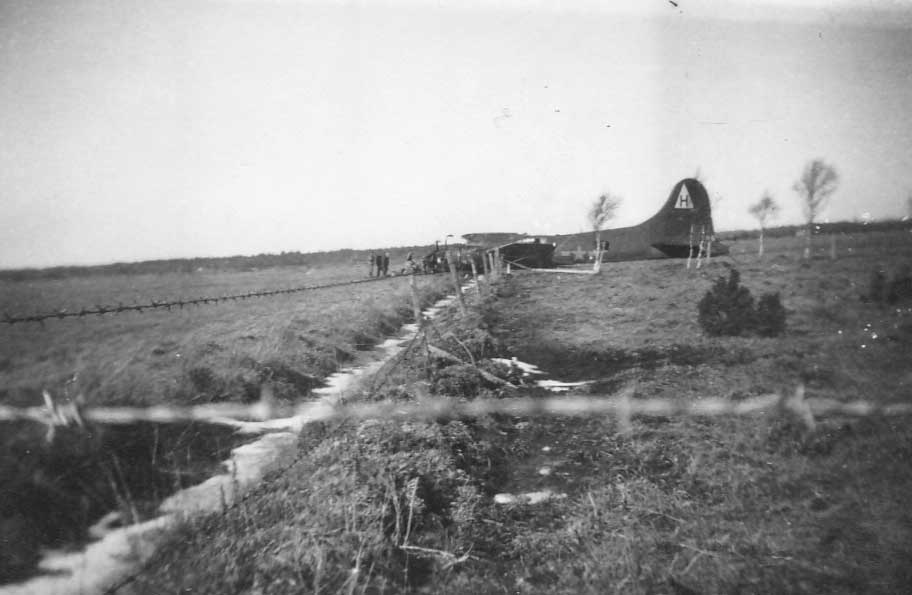
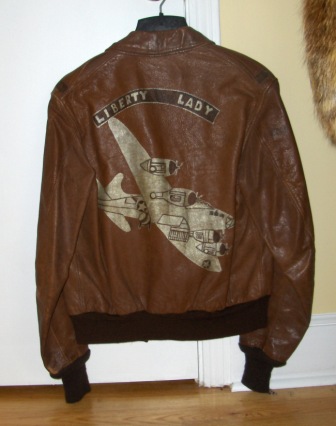
September 2012. Ulf Gahm at the site of the March 1944 crash landing of the B-17 Liberty Lady

September 2012. Ulf Gahm at the site of the March 1944 crash landing of the B-17 Liberty Lady

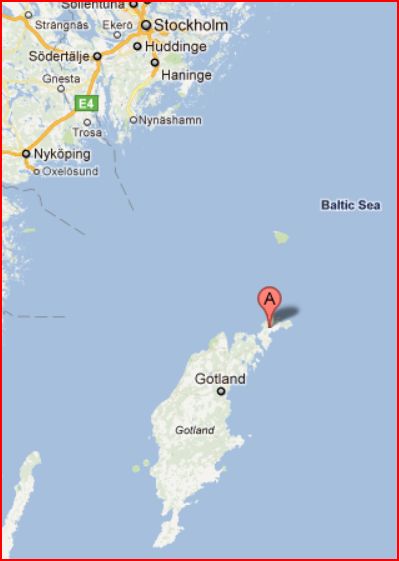
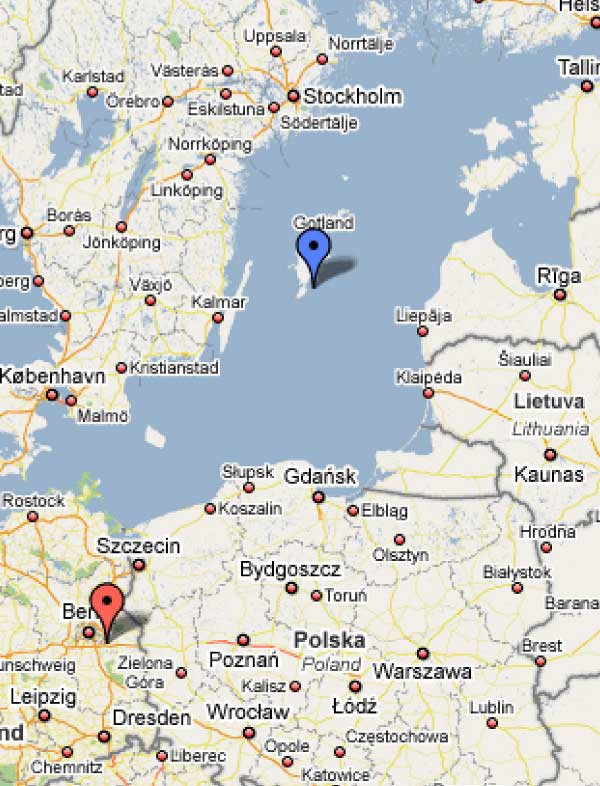
In January of 2011 I was excited to receive an email from a gentleman who wrote to me “from the sunny island of Gotland, Sweden.”

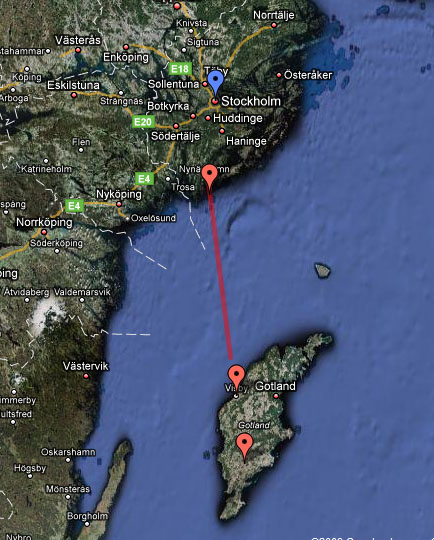
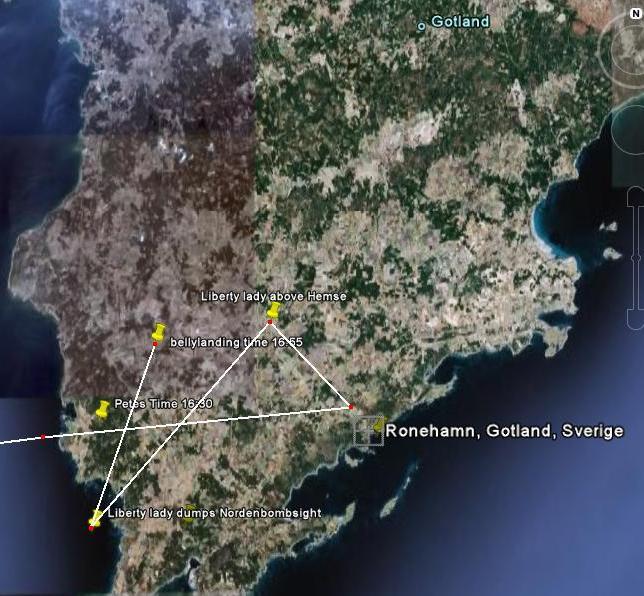
Gotland!?! That’s where my Dad’s B-17 crash landed in 1944! I had been writing about my Dad’s B-17 missions since the beginning of 2009 … I’ve  heard about the Swedish island of Gotland my entire life.

The gentleman’s name was Ulf Gahm, and he wrote:

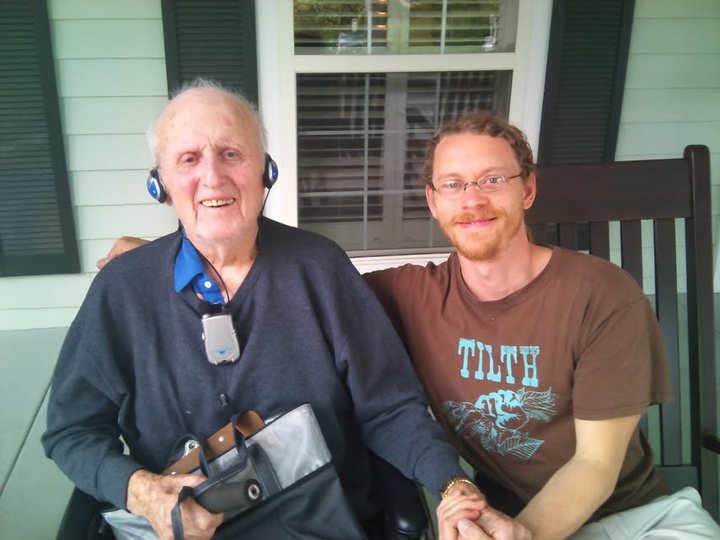
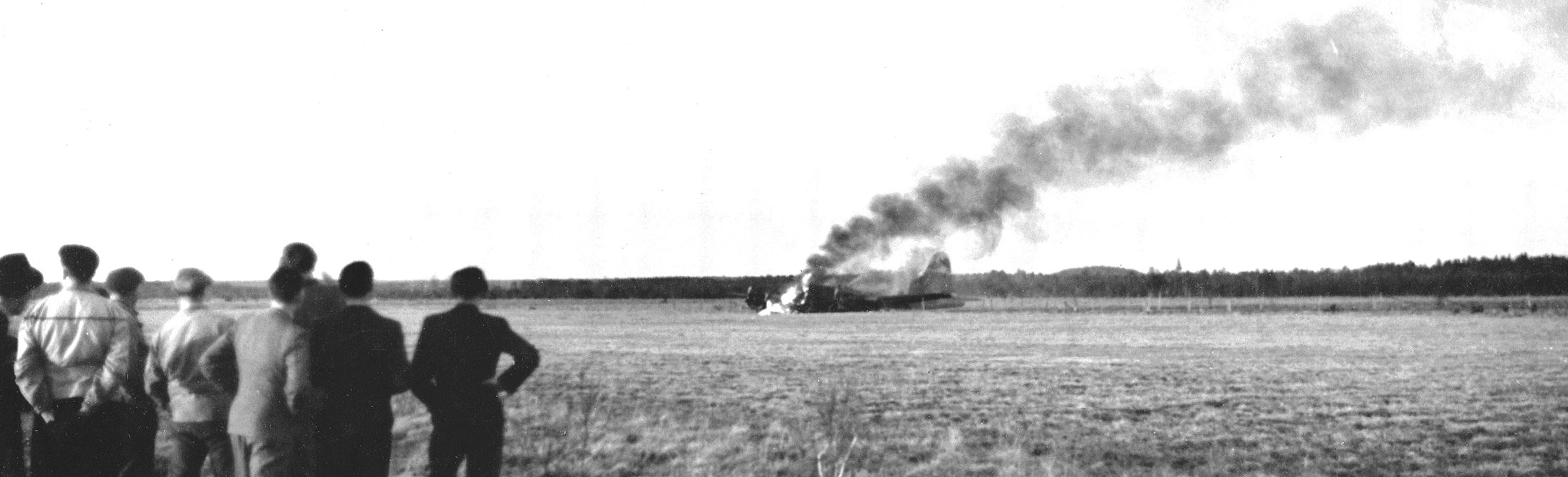
I am an editor at Gotlandsguiden  — the biggest and most comprehensive tourist magazine on the island. My interest in Liberty Lady goes many years back. My father (who is 80 years old today) did actually see the plane go down on the field and therefore he is one of few eyewitness of the event.

Ulf wrote an article for his magazine. I hope I helped a little.  Then I wrote an article about meeting him. That began a conversation that only ended this past week.

Ulf helped me with translations. When I was trying to identify the locations of all the foreign legations in Stockholm during WWII, he did some research for me.

At the Visby radio station

At the Visby radio station

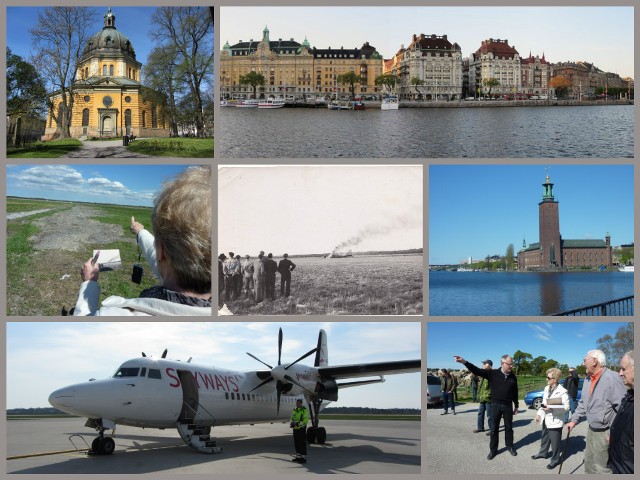
When my son Johnny and I flew to Sweden last May, Ulf volunteered to orchestrate all the Gotland logistics. He met us at the tiny Visby airfield and drove us to our hotel.

The next day he and his beautiful wife Eva took us to Hemse to visit the Mästermyr, the site of the forced landing of the Liberty Lady. Ulf choreographed everything. He invited several gentlemen who had been eyewitnesses in 1944.  One of them was his father. When Johnny and I couldn’t understand their conversations in Swedish about the day the B-17 came to their island, Ulf and Eva translated for us.

Ulf contacted the press. He made arrangements for me to be interviewed on the Visby radio station. He, Eva, and their son Albin gave us a grand tour of their historic city.

When we were there, Ulf explained that he had just been diagnosed with cancer. He was going to start treatment that he knew would not be a cure, but he hoped it would give him several more good years.  Of course, I thought.  He’s young (younger than I am!) and otherwise seemed to be in good health. On our Visby tour, Ulf led us up some hills that took my breath away, and I don’t mean just the view.

I am returning to Gotland in September with my brother and sisters to show them the Mästyrmyr, the farmer’s bog where it all began. I expected that I would be able to reunite with this good man. In fact, we were already making plans …

Not to be. Ulf Gahm died on April 27th with his family at his bedside.

Too young, too important, too good, too much.


Share this Post

Glenn Miller and the Bedford Corn Exchange

2013 April 28
by Pat DiGeorge
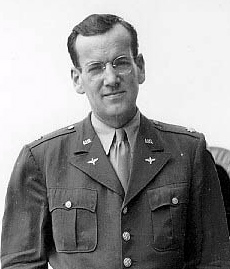
Major Glenn Miller, US Army Air Corps

Major Glenn Miller, US Army Air Corps

“Corn Exchange??”  It’s a British term that describes the buildings where farmers traded their grains. What I read in Wikipedia is that the name “corn” referred to all cereal grains. This type of trade was common up until the 19th century.

The Bedford Corn Exchange was constructed in 1874 and was designed to be a concert venue. Bedford was the nearest large town to many airfields in the Bedfordshire area : Thurleigh, Twinwoods, Harrington, Molesworth, Chelveston, Podington, Kimbolton, Glatton, Madingley, Steeple Morden, Nuthampstead,  and Bassingbourn.

The actual building is very much in use today, hosting variety of live entertainment events, many hundreds each year.

In the beginning of World War II the BBC Symphony Orchestra, the principal orchestra of the British Broadcasting Corporation, moved first to Bristol, then when that locale was bombed the orchestra moved to Bedford.  The orchestra practiced and performed all over town with many live broadcasts originating from the Bedford Corn Exchange.  According to their website, during the war there was increased interest in American music. Of course! The Yanks were everywhere!

The most famous American musician to play at The Corn Exchange during the war was Glenn Miller, but he wasn’t the only celebrity to perform there. Bob Hope, Bing Crosby, Dinah Shore and many others entertained the locals and the armed forced stationed nearby.

Plaque outside the Bedford Corn Exchange

Plaque outside the Bedford Corn Exchange

Captain Glenn Miller already had a famous band when he joined the Army in October of 1942. Right after D-Day Captain Miller arrived in England with his Army Air Forces Band. They were originally housed in London but soon figured out they needed to find a safer home. Since the BBC Orchestra was already broadcasting from Bedford, in July of 1944 Miller and his band moved there too.  On July 9th he gave his first broadcast in the UK from the Bedford Corn Exchange.  Here’s a good BBC interview in September.

The band was officially based for administration purposes from Milton Ernest Hall, the Eighth Air Force Service Command Headquarters. Milton Ernest is about five miles north of Bedford.  Glenn Miller and his manager, Don Haynes, often stayed there and dined in the Officers’ Mess.  On the afternoon of July 16, 1944, Miller gave a concert on the grounds of the hall. There were 1600 officers and men present.

The band’s first performance, though, was at Thurleigh, home of the 306th BG, on July 14, 1944. A makeshift stage was built inside one of the hangars. 3500 People were sitting on the floor, perched on the wings of the planes, and literally hanging from the rafters.  It was almost too crowded to dance. It was fabulous.

The Glenn Miller band practiced in various venues and over the next few months they played at airfields all over the area. I’ve read that the band members slept at the American Red Cross Enlisted Men’s Club in Bedford. When I visited Thurleigh last year my son and I stayed at the Queen’s Head Hotel  in Milton Ernest, whose pub was frequented by Miller.  The owners pointed out the window toward where Milton Ernest Hall Care Home is today, a private nursing home, and mentioned that it was where Glenn Miller spent his last night.

On December 15, 1944 Glenn Miller took off in a small plane out of nearby Twinwood Farm, an RAF airfield. His destination was Paris but his plane was lost en route, the mystery never solved.

Incidentally, my father-in-law John DiGeorge, Sr. with the U.S. Army’s 102nd Cavalry Reconnaissance Squadron was waiting at the Paris hotel ballroom where Miller’s band was scheduled to play.  All they knew, of course, was that he had been delayed … and delayed … and delayed.

(Today there is a Glenn Miller Museum at the Twinwood Airfield Control Tower.)

Nothing else can bring back the mood and memories of 1944 Bedford and the Corn Exchange better than a little Moonlight Serenade.


Share this Post

First Over Germany

2013 April 12
by Pat DiGeorge
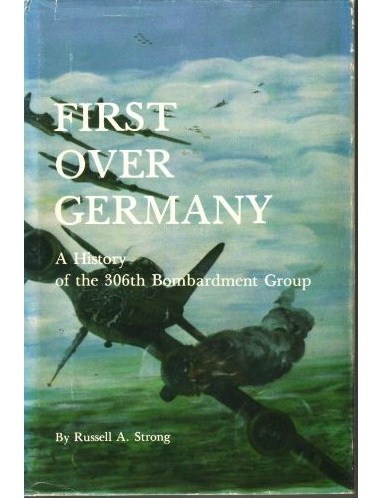
First Over Germany by Russell A. Strong

First Over Germany by Russell A. Strong

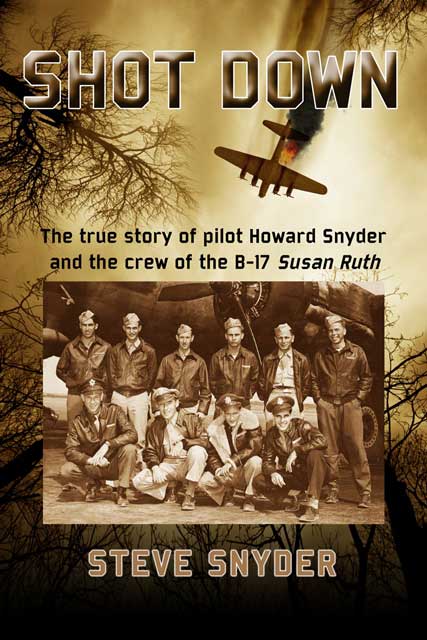
(1982) First Over Germany: A History of the 306th Bombardment Group by Russell A. Strong is the history of the 306th Bomb Group.

The author, Russell A. Strong, was a navigator with the Milton M. Adam Crew of the 367th bombardment squadron, one of four squadrons in the 306th BG.  Strong arrived at Thurleigh, the RAF airfield that housed the 306th, midyear 1944 and flew 35 bombing missions over France and Germany. He then went on to serve as a navigation instructor in the States.

During the years of his postwar career with Western Michigan University and after retirement Strong worked tirelessly in support of the 306th Bomb Group Association. He created the Echoes quarterly newsletter which included historical accounts of the 306th … both combat crews and ground crews. Past copies of the newsletter can be found at the office 306th BG website.  As vintage issues are discovered they are digitized and added to the collection.

WWII historian Vernon L. Williams, who took over as editor of Echoes in 2007, calls this book one of the best unit histories to come out of World War II. In the preface Russell Strong describes the years of research that went into it.  The most interesting pages came from the 306th veterans themselves who sent their stories, often painful ones, to Strong.  Some of these veterans also helped fund the project.

First Over Germany recounts the group’s history from October, 1942 to April, 1945. It is a must for anyone doing research on this group. It is very readable. I swear that some of the most harrowing stories have been woven into a few of the World War II movies I’ve seen.

Strong also printed a photo collection of the 306th combat crews. Both books are now out of print.  Today you can buy a copy of First Over Germany on Amazon for about $200.  The combat crew book has been digitized at the Oregon Chapter 8th Air Force Historical Society website.

Through the years, Russell Strong collected photographs and other historical materials which have become the foundation of the wealth of digital material now available on the 306th BG website. Last year the 306th Bombardment Group Historical Association donated its treasure trove of history (most of it collected by Russell Strong) to the Mighty Eighth Air Force Museum.

In the author’s words:  ”Being a part of the 306th in 1944 was exciting, sometimes terrifying. Living again the 306th from 1974 to the present has been a most rewarding and enjoyable personal experience.”

Russell A. Strong died on the 2nd of October, 2009 in Charlotte, NC.
We can never thank our veterans enough.


First Over Germany: A History of the 306th Bombardment Group on amazon

Google


Share this Post

Memphis Belle

2013 March 11
by Pat DiGeorge
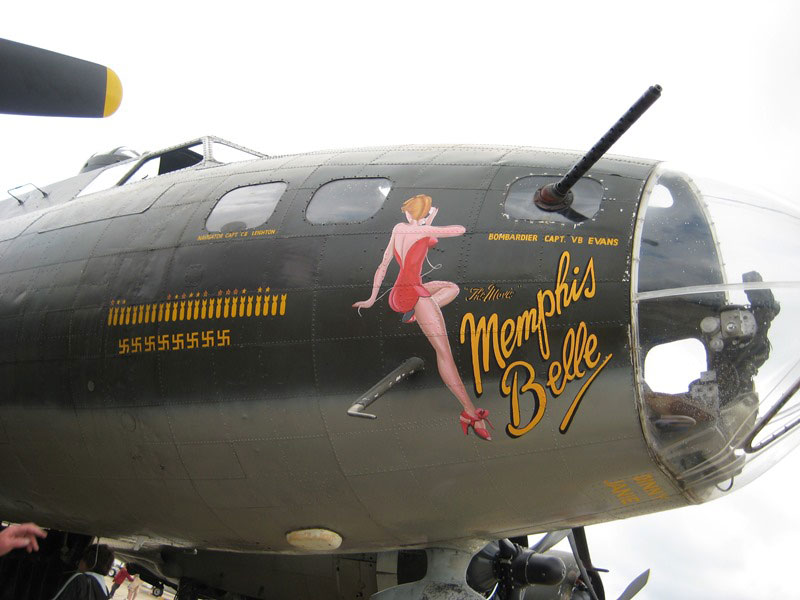
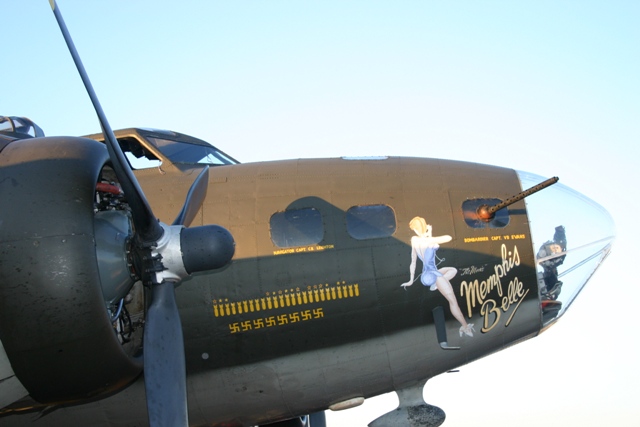
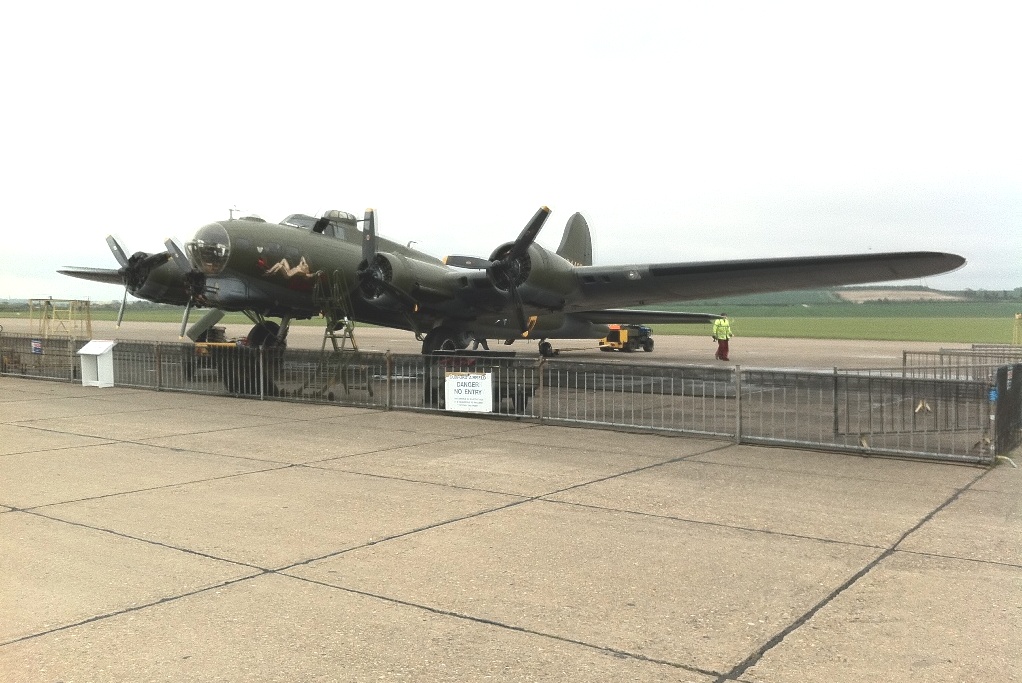
The Memphis Belle in Atlanta on March 3, 2013

The Memphis Belle in Atlanta on March 3, 2013

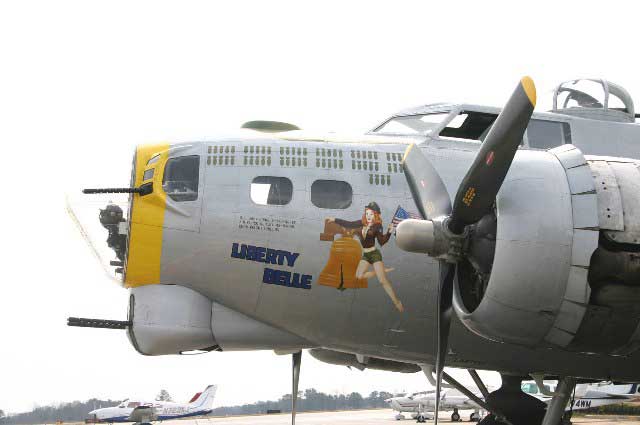
Last weekend the B-17 Memphis Belle came to town! This is not the original Memphis Belle, the B-17 piloted by Robert K. Morgan that was celebrated so highly in 1943 for finishing 25 missions. That plane is grounded and being lovingly restored in Dayton, Ohio.

Rather, this is the B-17 that was used in the 1990 movie “Memphis Belle.” It is being operated by The Liberty Foundation, the same group that owned the Liberty Belle, the beautiful plane that flew me around Atlanta in 2009 and was almost completely destroyed two years later.  Great news!  The Liberty Belle is being restored too.  The expense to do this is astronomical so donations are gratefully accepted.

The Memphis Belle was at the PDK (DeKalb Peachtree) airport for only two days with passenger flights set up all day long and ground tours after they were done.

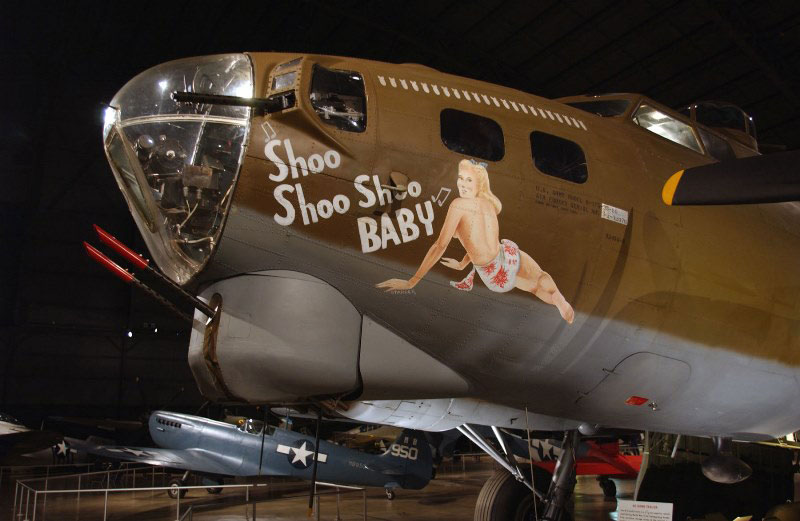
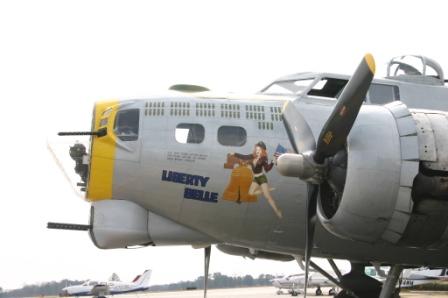
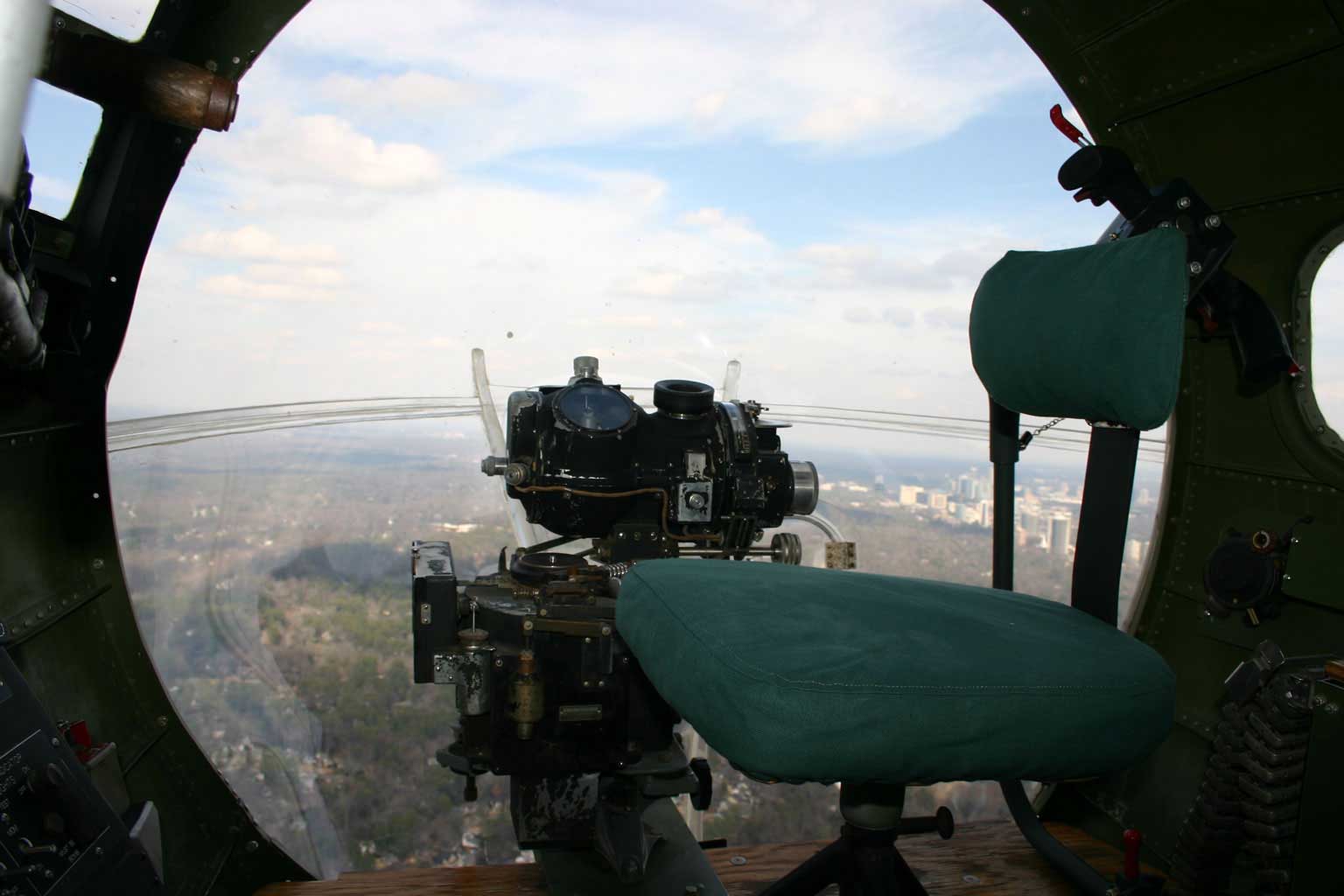
"The Nose"

“The Nose”

As I drove up the street to the airport on Sunday mid-afternoon I heard it. There it was, flying low over the nearby buildings and as I watched it I imagined that it could have been my Dad’s B-17 Liberty Lady flying, lost, over the island of Gotland shortly before its belly landing.

There is a lovely waiting area at PDK with huge picture windows looking out onto the airfield.  I had a ringside seat and for several hours watched the plane take off and land.  It was freezing outside.

(Okay, okay.  Perhaps not freezing but very very cold.  I kept thinking that it was like East Anglia would have been on a nice day.)

As I watched the Memphis Belle come and go I noticed that there were fewer WWII veterans there than there had been in 2009. They’re all either just under or just over 90 years old now.

Dennis Baker, WWII Bombardier

Dennis Baker, WWII Bombardier

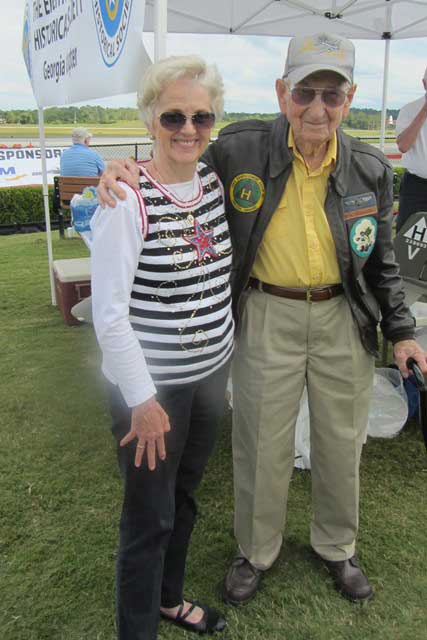
It was my incredible good fortune to meet Major Dennis Baker and his family. Like my Dad, Major Baker had been a bombardier in the Eighth Air Force, and he agreed to let me tour the B-17 with him!

Major Baker is almost 94 years old but you’d never know it. Yes, probably due to the roaring thunder of the bombers he once flew in, Baker explained that he is “deaf in one ear and can’t hear out of the other.”

If you want to see Dennis Baker in action today and also read more about his action during the war, here is an article about his visit to the WWII Heritage Days in Peachtree City. It’s an annual event honoring our veterans.

Finally it was time for us to board the Memphis Belle. There was a long line of people waiting to climb a ladder up through the hatch door near the front of the plane. We got special permission to step up into the waist area at the back side door. 

I’d forgotten how cramped it was. Even though the nose was blocked off for everyone, we did squeeze/crawl up into it. The bombardier chair had been taken out but there was that panoramic view.

Major Baker, who flew 35 missions in a B-17

Major Baker was stationed at Chelveston with the 305th BG and completed 35 missions in a B-17!

Most of the time we sat in chairs that had been put in the radio room for passenger flights. From there we had a grand view of the Bomb Bay where the bombs were stored.  Just as air crews had to do 70 years ago, the folks on tour had to squeeze through a narrow opening and walk over the 18 inch catwalk. 

(I didn’t see how some of the well fed gents would make it through, and one did have to turn around.)

I asked the Major, “Dennis, did you ever have to walk over that cat walk with the bomb bay doors open to the earth below?”

“Yes, I did … twice!” he replied. Once one of the bombs didn’t drop when it should have and had to be manually released.

“We had a safety belt that would keep us from falling down through the bottom of the plane,” Baker reassured me, but all I could visualize was he and my Dad scrambling over that narrow piece of metal while the plane was tumultuously flying through the Flak and flames.

Thank you so much, Major Dennis Baker, for the personal tour.  We can never thank our veterans enough.


UPDATE:  Please read the comment below by Jim Mandelblatt whose father actually flew ”Movie Memphis Belle,” then a VB-17G (s/n 44-83546) on various times between May and September 1954.

Google


Share this Post

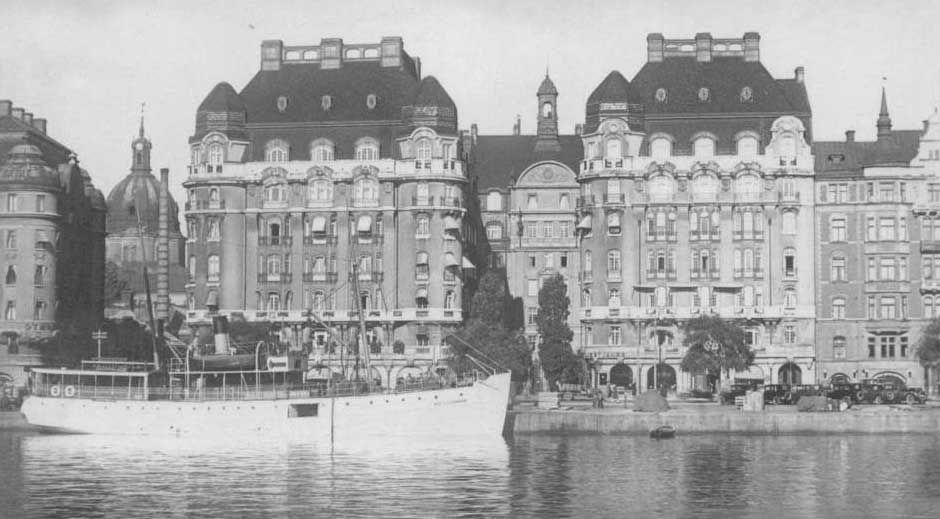
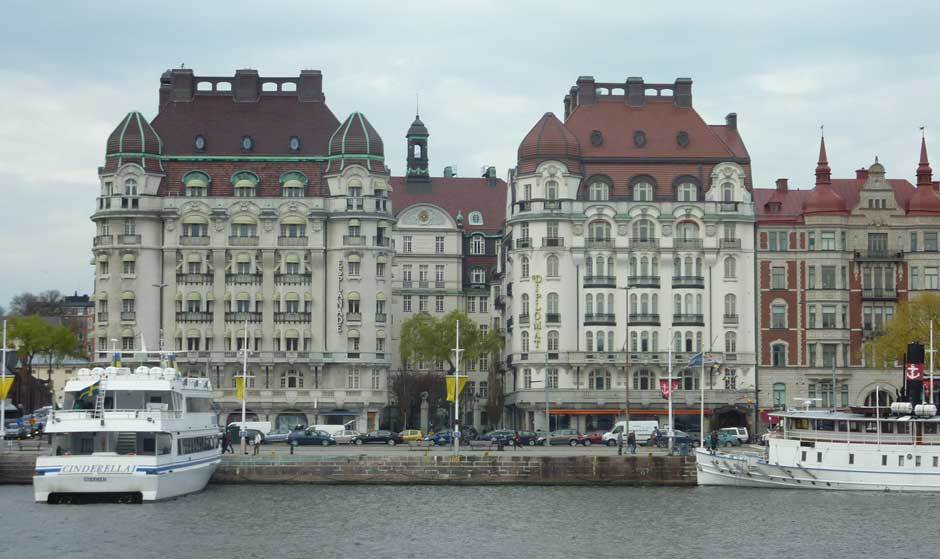
Strandvägen 7 ~ Then and Now

2013 March 2
by Pat DiGeorge
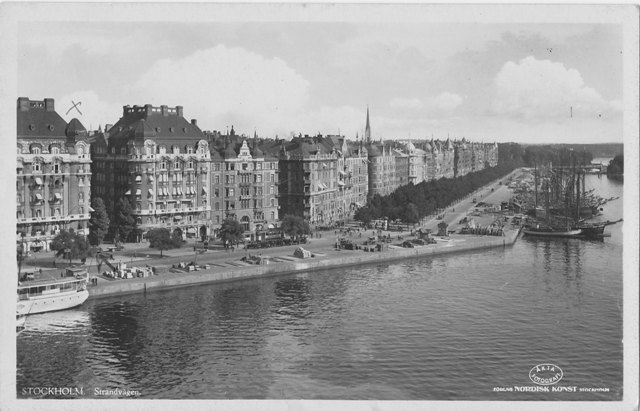
The American Legation on Strandvägen if marked with an "X."  From the wartime scrapbook of Hedvig Johnson Allen

The American Legation on Strandvägen is marked with an “X.” From the wartime scrapbook of Hedvig Johnson Allen

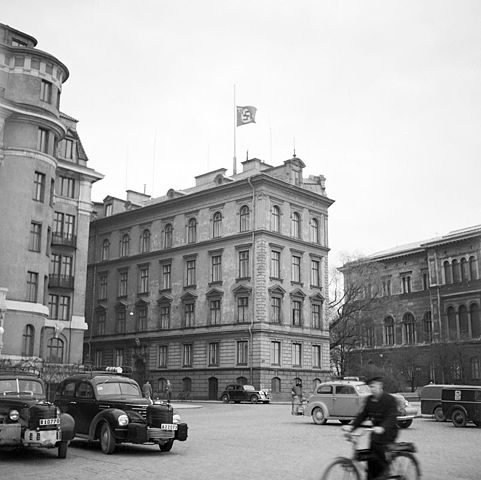
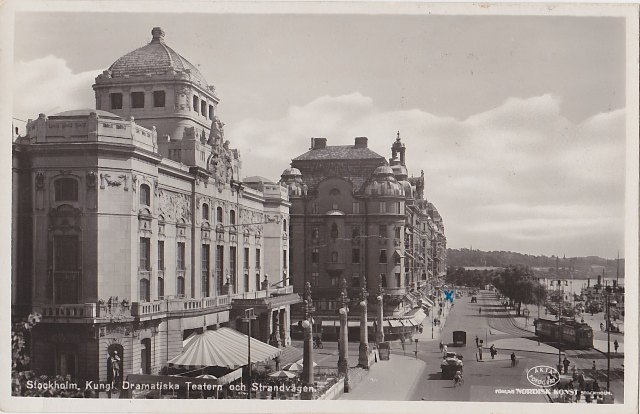
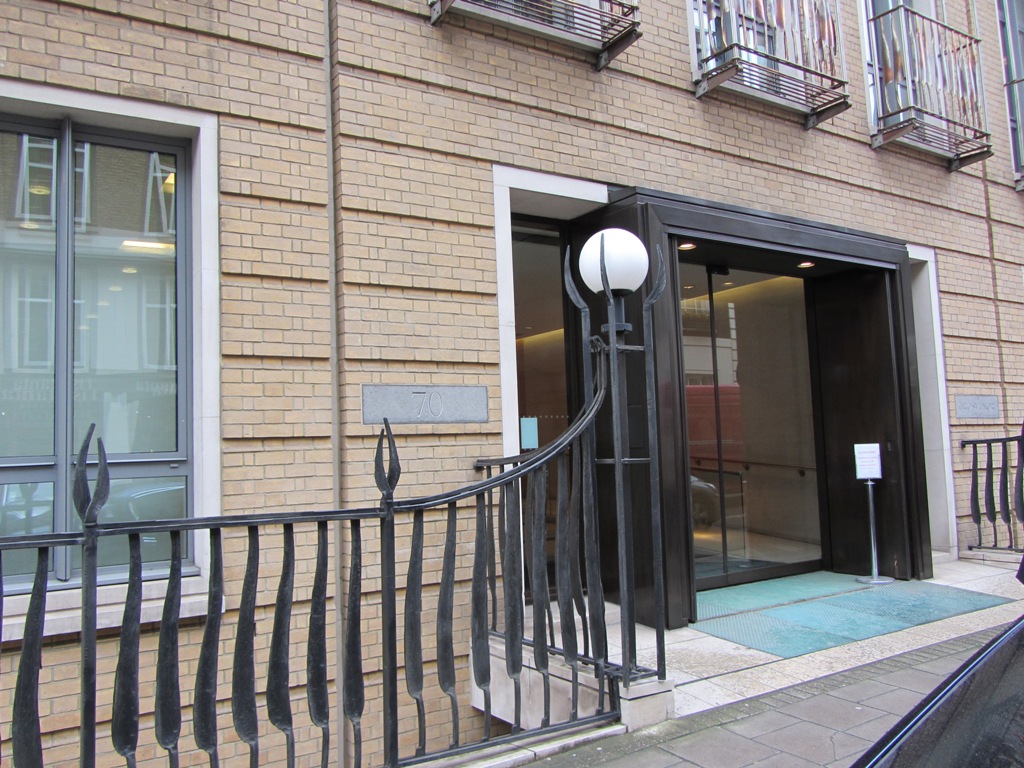
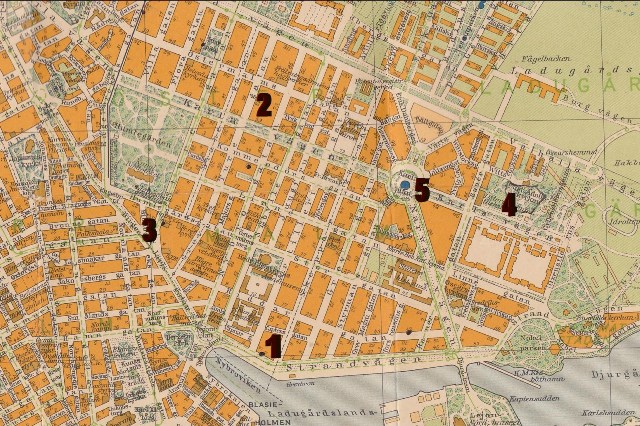
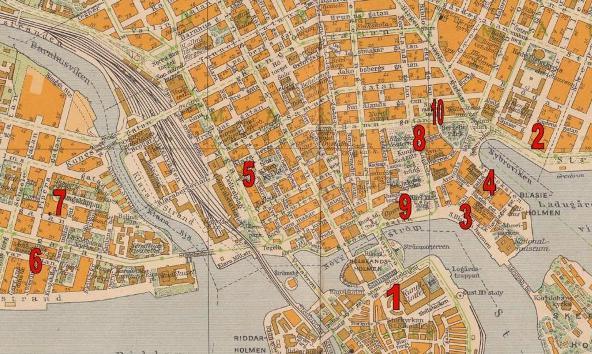
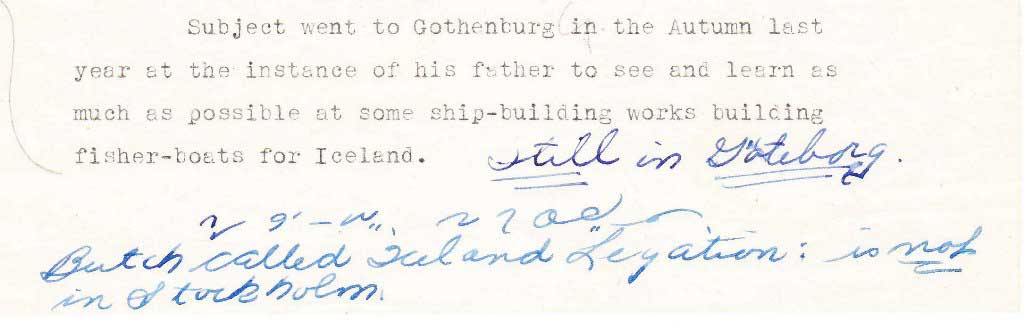
I have written about Strandvägen 7 several times. This is the complex on the famed “Beach Road” in Stockholm where the American Legation was located.  In the back corner of the Legation offices were the top secret desks of OSS Stockholm, the Office of Strategic Services.  Just across the courtyard from 7a, the Legation, was the German Military Attache office at 7c. Between the two was the American Military Attache Office at Strandvägen 7b.  Cozy.

Because Stockholm was neutral many countries had legations there. I have identified the locations for the American and the German offices.  My Dad worked from both 7a and 7b. When he left his office he would often be followed. I’m guessing that all the Germans had to do was look out their window and see who was coming and going.

And for sure, the Americans were doing the same thing.  Everyone was spying on everyone else.

This week I connected with a gentleman whose father worked at the Legation at the same time my Dad did. 1st Lt. Nicholas B. Kehoe, Jr. flew out of North Pickenham with the 492nd BG. On June 20, 1944 his B-24 force landed in Sweden. We’re not sure how he happened to end up working for the Legation.  Perhaps like my Dad he possessed administrative skills that would have been useful. Perhaps he spoke a second language.  All I know is that he worked with my father in Stockholm in 1944.

Thanks to the family of Lt. Kehoe, here are some remarkable Then and Now pictures of Strandvägen 7:


Google


Share this Post

VKF Ball Bearing Works

2013 February 14
by Pat DiGeorge
For me, this was an excellent visual of how ball bearings work. (Author PlusMinus)

For me, this was an excellent visual of how ball bearings work. (Author PlusMinus)

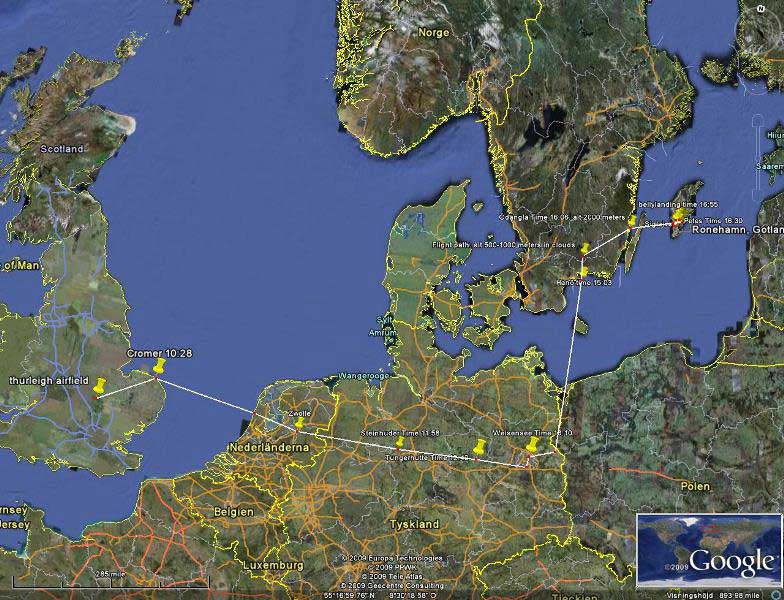
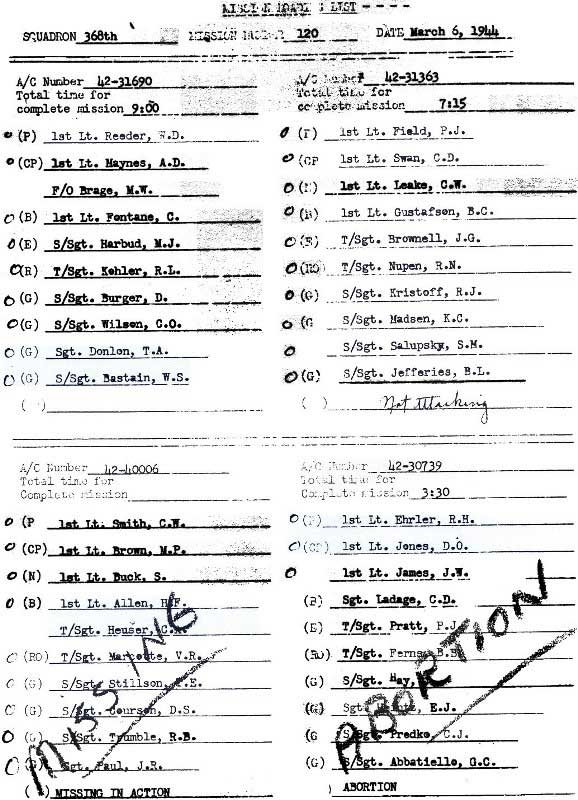
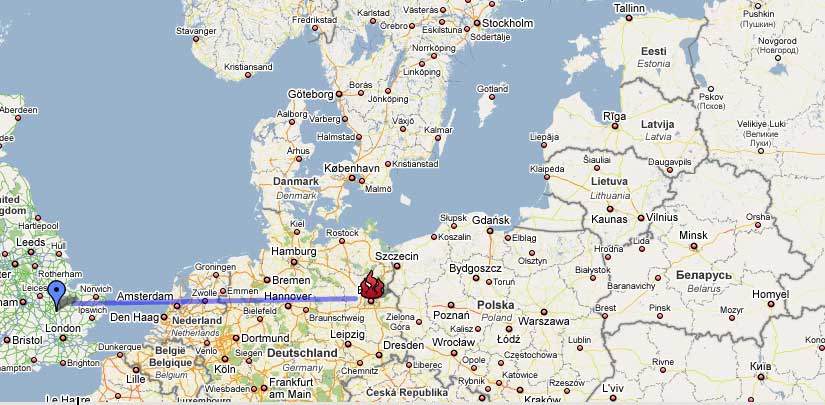
On March 6, 1944, the day of the first large-scale daylight bombing of Berlin, the assigned target for the Liberty Lady B-17 of the 306th BG was the VKF Ball Bearing Works at Erkner, an eastern suburb of Berlin, about seven miles from the city center.

VKF stands for (in German)  Vereinigte Kugellagerfabriken AG. It was a subsidiary of the Swedish company SKF or Svenska Kullagerfabriken AB.

SKF was founded in 1907 by Sven Wingquist, the inventor of the double-row self-aligning ball bearing. He created a better ball bearing! The first factory was built in Göteborg, Sweden. By 1908 branch offices opened in Germany and France; the next year a subsidiary in New York, then soon after, Great Britain, Denmark, Norway, Belgium, Holland and Russia. The company had sales agents all over the world.

With the exception of the depression years business was good. By the 2nd half of the 1930’s however, business was booming!

Why was business so good?  Their product, ball bearings, were critical to the manufacture of the most important war materials, such as planes, vehicles, tanks, guns, submarine engines. The bearings reduced friction and wear in the machinery that was being produced at breakneck speed.

You can read “SKF’s history book”at the company website. “…German rearmament campaign under Adolf Hitler was a major stimulus to Swedish business and industry, making the late 1930’s a very positive time for Swedish industry in general for the SKF in particular.”  Sweden was Germany’s largest trading partner.

Being a neutral country Sweden was allowed to continue trade with Germany as well as the Allied countries. As the war progressed and when it became clear that the Allies would prevail, more and more pressure was put on Sweden to decrease their exports of ball bearings.

OSS (Office of Strategic Services) agents had infiltrated the SKF plant in Göteborg and were monitoring shipments to Germany, so OSS Stockholm had a good idea of how much was being exported.

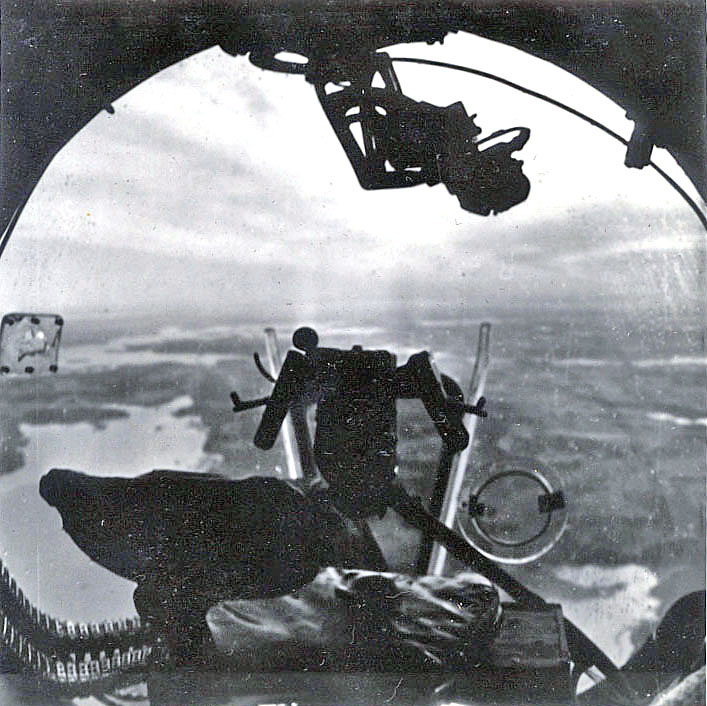
Although in B/W this is what my Dad would have seen from the bombardier's seat in his B-17. (The 8th Air Force Historical Society)

Although in B/W and taken on a later date, this is what the crew would have seen from the bombardier’s seat in their B-17. (The 8th Air Force Historical Society)

Another huge problem was that the ball bearing manufacturing plants in Germany, in particular at Schweinfurt and at Erkner, were prime bombing targets.  I have read that the Eighth Air Force wanted these factories to be referred to as VKF Ball Bearing works and not SKF so it wouldn’t appear that they were bombing a Swedish company.

Postwar analyses concluded that the damage to these plants was significant but all in all the Germans were still able to get the ball bearings they needed until the end of the war.


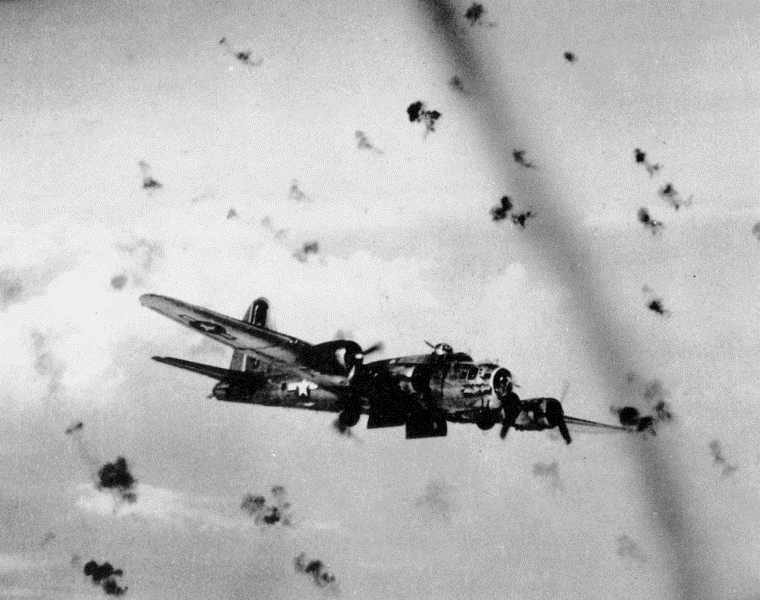
So this is where the Liberty Lady was headed on March 6th.  After participating in what has been described as the largest air battle ever waged they fought their way almost to Erkner when the Lady was crippled by antiaircraft fire.

It would be my Dad’s first and last trip to Berlin.

Google


Share this Post

Hotell Rättviksgården

2013 January 29
by Pat DiGeorge

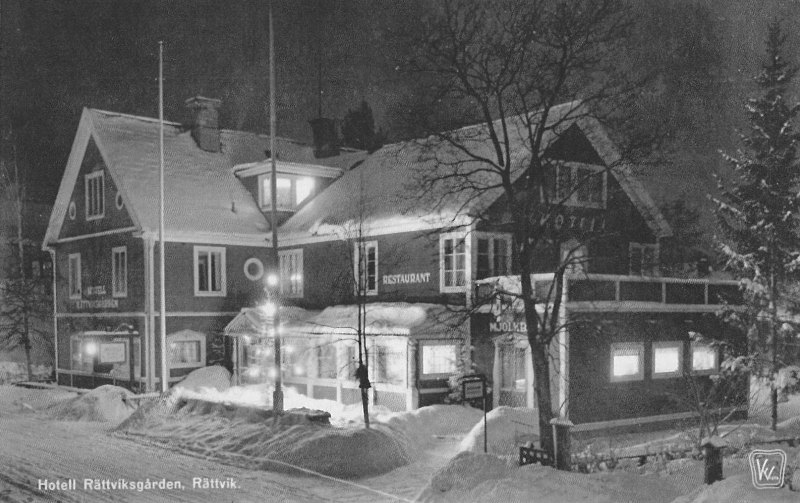
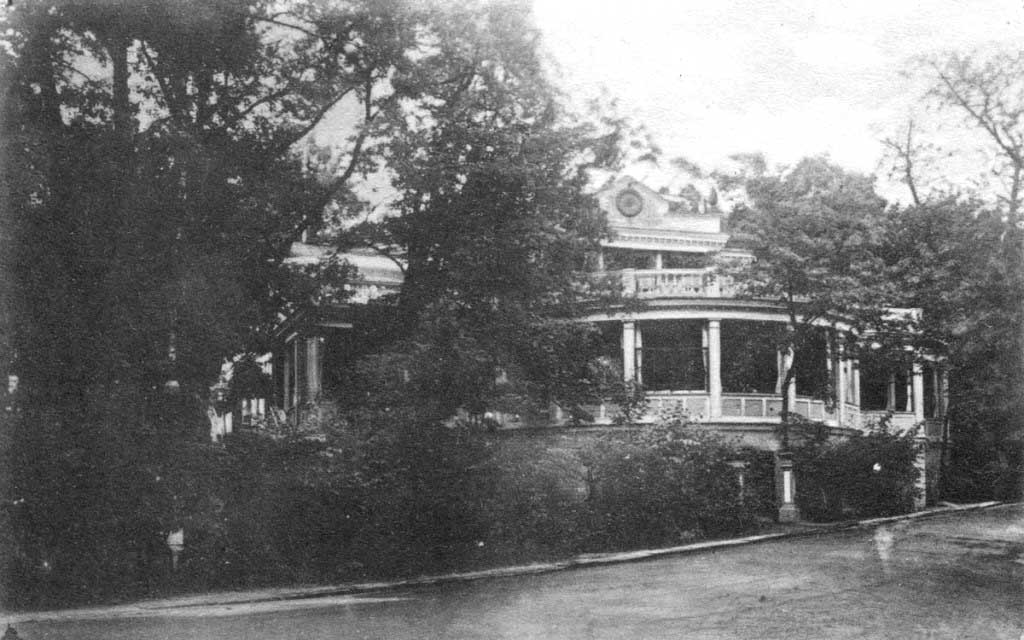
Hotell Rattviksgarden, photo from the personal collection of Gunnel Larsen

The Hotell Rättviksgården is another little hotel where the American internees in Rättvik were housed during 1944. It was located downtown right next to the Turristhemmet.

I don’t know much about this hotel and hope my readers can enlighten me. You can see a postcard in color at this site (along with many other beautiful Sweden scenes.)  It is marked 1951, and historian Karen Cline reports that it was indeed there in 1953. I’m not sure when it was torn down … perhaps at the same time as the Turristhemmet next door.

Provided by Karen B. Cline, from the album of internee Robert Schauseil. The photo, labeled “Taking back the radios” was taken in front of what we now know is the Hotell Rattviksgarden. 1944.

As you can see if you go to the site with the postcards this hotel was painted “Falu Red.”

On flickr I found an excellent photograph marked “Turisthemmet” but which is actually the Hotell Rättviksgården. The owner of the photograph states that his Dad’s crew stayed there during the summer of 1944.  If you examine this picture you can see right behind the red hotel the white Turristhemmet with the sign over the door.


Thanks again to Helen Engblom, Gunnel Larsen and Karen Cline for your help on the Rättvik hotels!

Google


Share this Post

Turisthemmet Rättvik

2013 January 21
by Pat DiGeorge

On Vasagatan in Rättvik this parking lot with a bus stop is where the Turisthemmet once stood.  Photo from the collection of Karen B. Cline.

Another small hotel that hosted the American Internees during World War II Sweden was the Turisthemmet (Tourist Home) in Rättvik.

According to Curt Jacobsson’s 2003 article in the Svensk Flyghistorisk Tidskrift some members of the Liberty Lady crew stayed there while others (the officers for sure) stayed at the Hotell Lerdalshöjden.

This property, located on the street now known as Vasagatan, was torn down in 1992 with the original intention to build apartments but that was never done. Today the area is used for parking. Once again, thank you to Helena Englblom, Gunnel Larsen and Karen Cline.

As always, I would love input from my readers. What else do you know about this little hotel?

From the collection of internee William Sapp Dixon of the Turisthemmet.

This photo shows the full Turisthemmet hotel where William Sapp Dixon of the Barrick Crew from the 100th BG. Their B-17 arrived on March 6, 1944, the same day as the Liberty Lady.


From the personal collection of Internee William Sapp Dixon. Standing in front of the Turisthemmet.

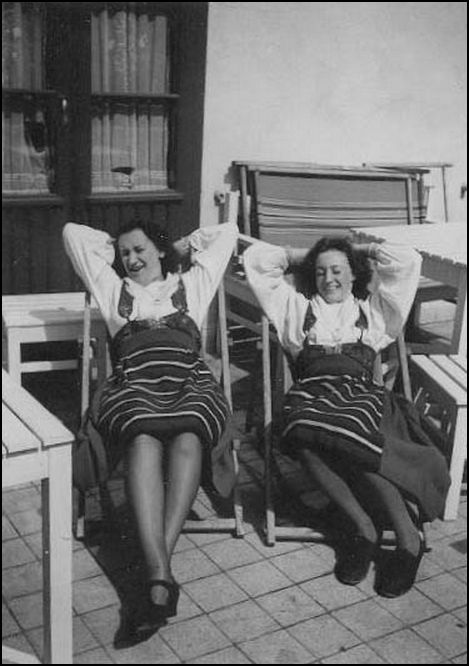
Two young ladies who worked at the Turisthemmet. I’ll bet it was a popular place. From the website “Welcome to Stragglers.”


Google


Share this Post

Turisthotellet Rättvik

2013 January 17
by Pat DiGeorge

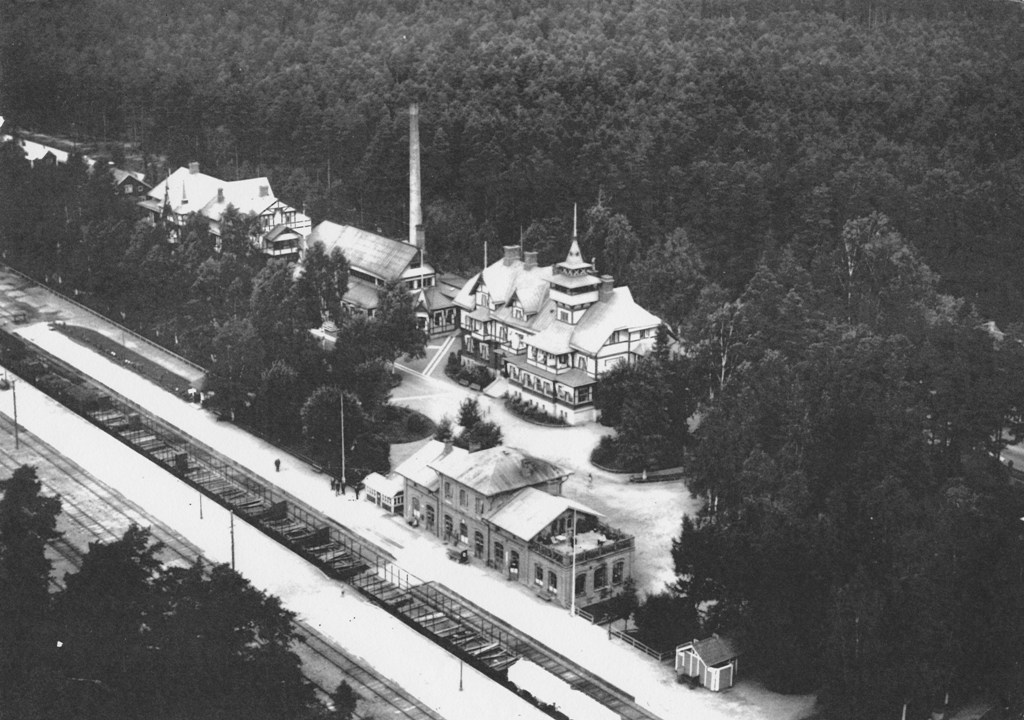
Turisthotellet Rättvik in 1927. From the wartime collection of Gunnel Larsen. The original hotel is in the center. I believe the next building to the left (with the huge smokestack) is the restaurant, and the “English Hotel” extension to the left of that.

Well, my attention returns to to Sweden, specifically more on Rättvik hotels.

First of all I want to thank the historians who have been sending me information.  Karen Cline did a series of newsletters on the internees during the late 90’s.  You can download them from our Facebook Group, “American Internees in WWII Sweden.”  Helena Engblom was my guide when I was in Falun and Rättvik last May.  She took me to her friend Gunnel Larsen’s shop where we pored over wartime scrapbooks for hours.  Gunnel wrote a history of this hotel, and Helena translated. THANKS to all!

When the railroad came to Rättvik in 1890 the area quickly became a travel destination for both summer and winter excursions.  From Stockholm it was eight hours by train.  Today it’s more like four hours by car, but back then everything took longer, didn’t it?

Another view, also from the Gunnel Linden collection. It was taken earlier than the photo above, and there is no smokestack yet.

Around that same time a beautiful large hotel was built by the state railroad company right next to the train station. It was called Turisthotellet, the Tourist Hotel.  We would say in the U.S. that the hotel had lots of “gingerbread,” many ornate architectural details. The architect was Lars Israël Wahlman who was born in Dalarna, the province in central Sweden where Rättvik is located.  At the Wikipedia site you can find other examples of his designs.

The hotel was very fashionable and so were the guests that it attracted.  In fact, business was so good that in 1897 the decision was made to build an extension just northwest of the original hotel. The new section was known as “The English Hotel,” but the whole complex was called Turisthotellet.  The two buildings were connected with a magnificent restaurant.

The day after the fire. Picture taken by Bob Schauseil of the Hick’s crew, arrived in Sweden on 17 January 1945. From the collection of Karen B. Cline.

When the airmen internees came to town in 1944 some were housed at the hotel.  This is not where the crew of the Liberty Lady stayed but I am confident that they visited it.  It was right by the train station, and there was a nice restaurant.

Sadly, in March of 1945 there was a big fire at the English Hotel, and it burned to the ground. Internees who stayed there took pictures.

What was left, the original part and the restaurant, was torn down in 1968, supposedly for the new highway.  It was a big sorrow, remembers Gunnel, for those who lived in Rättvik.

“The English Hotel” was replaced with a newer red brick hotel now known as Turisthotellet and open for business. I’m not sure when it was built and hope one of my readers will comment with that and any other information about the beautiful Turisthotellet.


Share this Post